
To better understand why the designs of mahjong tiles
vary so much, it is necessary to go back to how and
where mahjong developed.
China has a long history of games, and with particular
interest to a
student of mahjong, card games. Chinese
playing cards were originally woodblock prints on sheets
of Chinese paper which were then cut up, producing
cards roughly half the width of a Western playing card.
Most of the designs were based on money, with 3 or 4
suits of single coins, strings of cash, myriads of cash and
also, literally Characters (Craks).
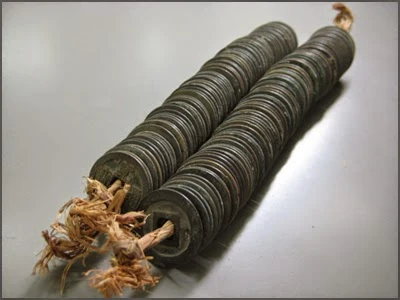
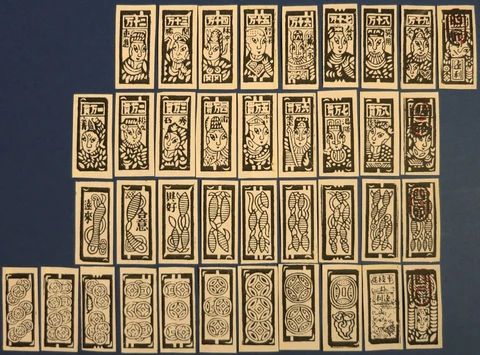
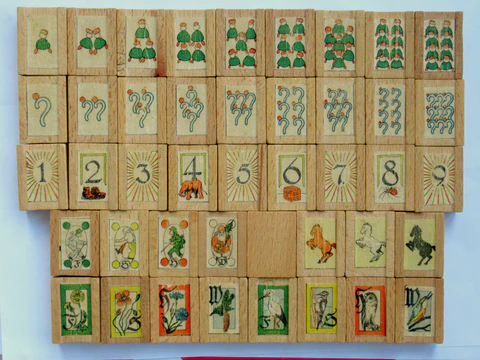
Below we first see a Ma Diao set with realistic Coins and
Strings of Cash on the bottom two rows. Below that image, with a light blue background, the top suit has been dropped.
Notice that the
wan
sinogram in th
e Character suit is
万
and
萬…
both meaning “myriads”.
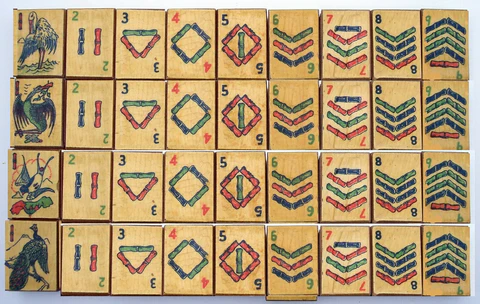
Note also the Fish for the #1 of Coins- it seems that the
carvers had already noticed the resemblance to the Bag
of Cash and used artistic license to morph it into a fish; it
doesn’t take a leap of imagi
nation to see that it can also
transform into a Bird
–
thus leading to the amazing variety
of #1 Bamboo images.
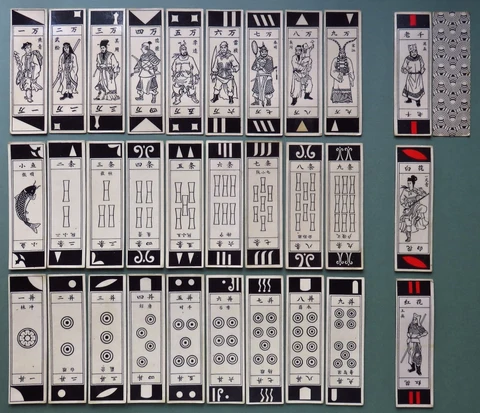
Below, this later set has morphed even more into the style of m
ahjong images that we are familiar with, even possibly
heralding the use of Dragons wit
h the red
–
stamped
honours cards.
The
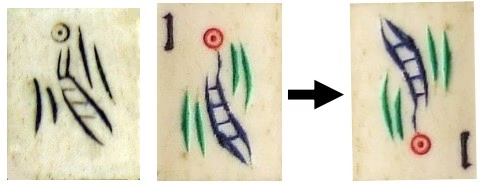
String of Cash, often called a ‘Mayfly’, is believed to
be the earliest rendition of the #1 tile in the suit that came
to be called Bamboo.
Without numbers on the tiles, as in the normal Chinese
manner, the figur
e could be in either rotation:
–
so you can
see that the rotated figure could easily be interpreted as
a swooping crane.
Now we can see how the artist might visualise a Bamboo
Sprout in the body of the Crane, thus associating it with
the bamboo suit
.
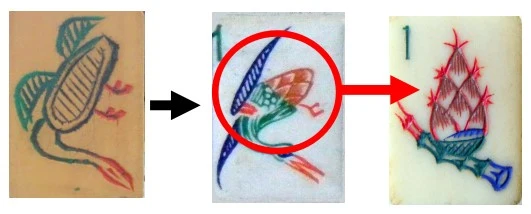
Notice the continuation of the ‘feathers’ on the top of the
sprout, the cross
–
hatch on the base and the angle of the
root matching the Crane’s neck.
Having established a Sprout as a valid image, it could
then be rendered as simply necessary,
without
reference to the original.
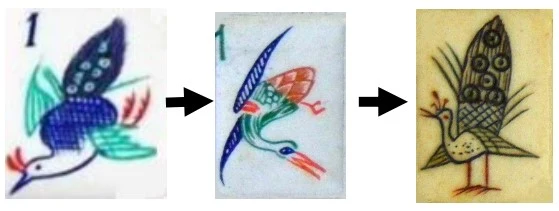
In the same way, the Crane could be transformed into a
Peacock and thence into other kinds of bird.
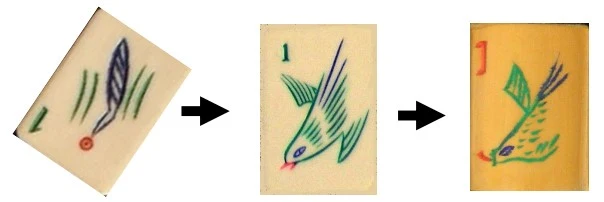
A similar transformation from Bamboo Sprout back to
bird might have occurred, with the root now acting as a
bra
nch for a bird to perch on…
Notice the squat shape of the birds and the red tuft on
the head.
Having established that there has been a lot of historical
creativity with the basic designs of the ancestors of our
modern Mahjong tiles
, it might be appropriate to look at
just one tile
–
the 8 of Bamboo
–
and see the variation in
design, from the very basic chisel marks of the earliest
sets, to the highly detailed and inventive carvings of the sets from the 1920s.
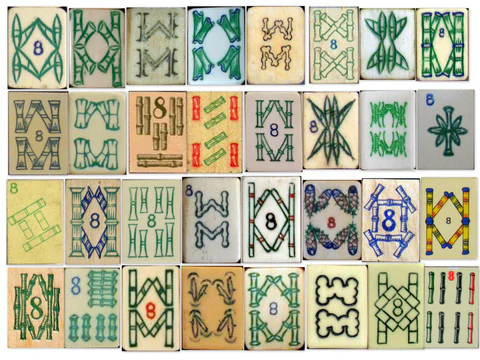
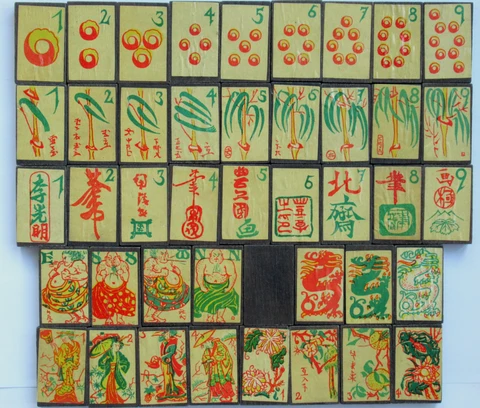
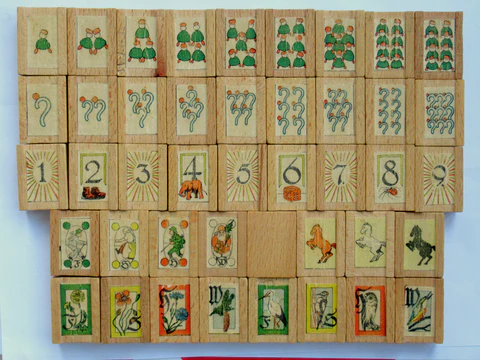
Below is a vernacular set from Germany, pre
–
1920 by
Winckelman.
And a reconstruction of a rare US Pah Lukk set; notice
how there are differe
nt Bambirds, Dragons and Craks.
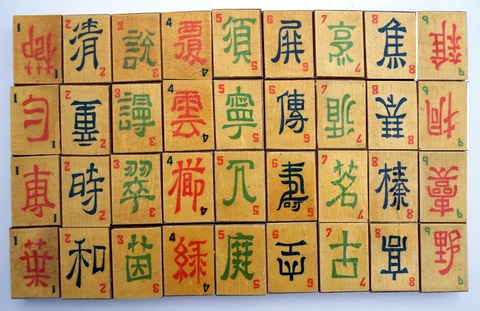
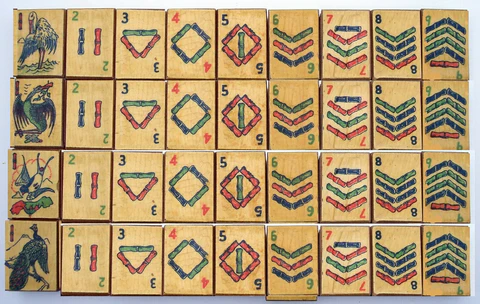
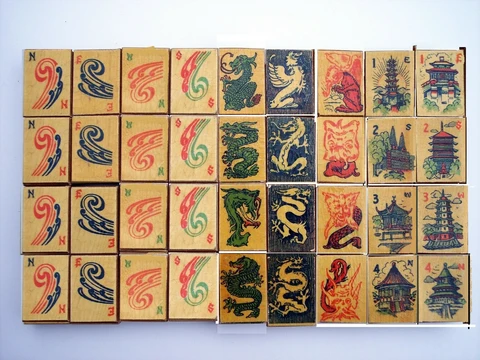
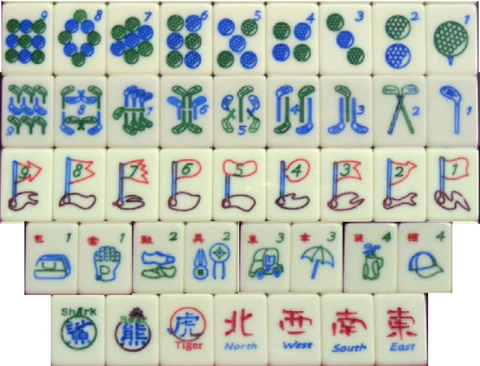
My friend Alex Chang’s firm produced a couple of ‘themed’ designs, one based on Golf.
Another below based on Christmas.
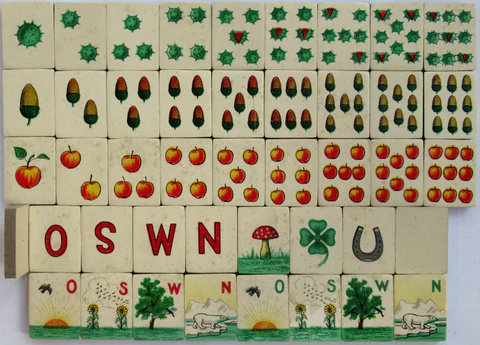
Another German set by Hein in Formica (Resopal)
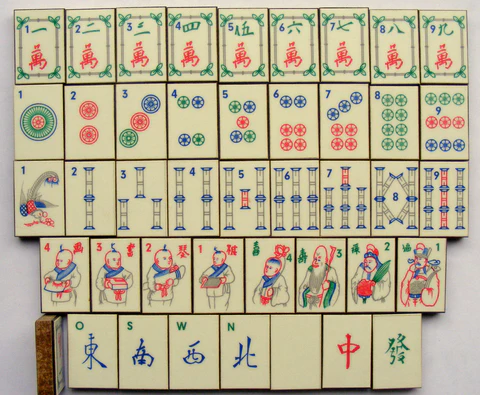
A French set by Arkmel using rept
iles and birds.
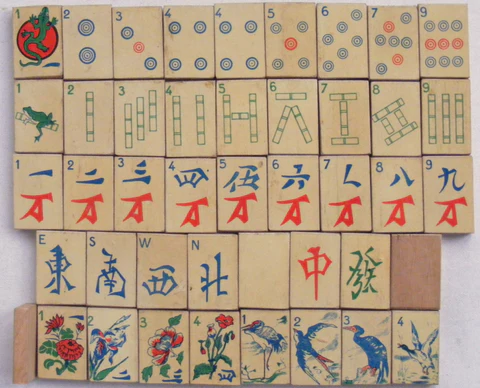
We can see that throughout history, there has been constant change, whether due to regional requirements, artistic license, promotional needs or simply to be different -let’s face it, what would be the point of collecting if all sets were exactly the same?
-Tony Watson
With over 500 tile sets in his collection, Tony Watson is an avid mahjong tile collector and restorer and mahjong historian. To see images of his collection visit Tony Watson Galleries.
Leave a comment below with your thoughts on the evolution of the tile designs…and if you are a collector, what is your favorite set?